Gambling Laws UK Gambling Legislations in 2026
In the same period, the average number of gambling ads seen by under 16s more than halved from around 4.5 to just 2.2 per week, and the ads were predominantly for bingo and lotteries. The Gambling Commission’s social responsibility codes specify that operators should still apply the principles of the UK Advertising Codes to any content or media that falls outside of the remit of the codes. While ‘content marketing’ posts which do not directly advertise a product or service may fall outside of the ASA’s remit, they are a popular marketing strategy with which operators can drive brand engagement and loyalty. We want operators to make use of available technology to extend commitments to de-targeting children and vulnerable people and age-gating social media. In Gambling Commission’s Young People and Gambling report 2022, 44% of 11 to 16-year-olds had heard or seen adverts or promotions relating to gambling on social media, and 13% reported following a gambling account on social media.
- Products which are safer by design will help prevent harm at source and reduce the reliance on reactive harm detection systems.
- As outlined in the consultation which preceded the uplift, some of the increase in income has been devoted to more staff that are able to both identify the scale of the black market and take action to tackle illegal operators.
- Polling from the Royal Society for Public Health found that a majority of both non-gamblers (66%) and gamblers (56%) supported a ban on gambling advertising in or near sports grounds.
- The Act also brought remote (online) gambling under statutory regulation for the first time, establishing the foundation for today’s digital gambling oversight.
The customer demand for 40 gaming tables does not exist, which can mean that a number of tables are sited but never used. This clarifies that wholly automated gaming tables are not gaming tables for the purposes of section 172(3) to (5) of the Act. The Gambling Act 2005 (Gaming Tables in Casinos) (Definitions) Regulations 2009 makes provision as to how references to “gaming tables” should be interpreted in this context. Please explain your answer, including any suggested changes to the regulatory framework where applicable. Casinos would not have the option of reverting back to their legacy rights under the existing regime, once they decide to increase their machine allowance in this way.

The list we have compiled features free online casinos too. We consider ourselves experts as our international team has been reviewing and testing casinos for over 20 years, playing both online and offline. The list we have compiled features free online casinos too.In addition, our guide helps you learn the rules of popular casino games you’ve always wanted to play — like Blackjack, Roulette, Craps, and Baccarat. You can also use our guide to live dealer sites or find info about UK land-based casinos.
Fees
Of course, you’ll need to restrict yourself to casino online play, poker rooms, and bookmakers that are fully licensed and regulated. The new financial practices not only give you peace of mind, but greater transparency means the entire gambling industry is more accountable. Following the legislative changes that came into effect on November 1, 2014, all licensed casino online sites were subsequently required to hold all player funds in a separate account.
For casinos moving onto the new regime, section 187 of the Gambling Act 2005 should require operators to apply to the licensing authority to vary their premises licence. We agree that operators should be required to notify licensing authorities and the Gambling Commission if they decide to take-up the entitlement to additional gaming machines under the new regime. The majority of respondents (93%) agreed that operators should be required to notify licensing authorities and the Gambling Commission if they decide to take-up the entitlement to additional gaming machines under the new regime. Despite indications from operators that there would not be appetite to site more than 80 machines in a single location, we want to ensure that this is not a possibility, removing the risk that these casinos could site more machines than a Small or even Large 2005 Act casino. For example, a licence for an FEC allows the operator to site an unlimited number of Category C and D gaming machines in premises which are open to all ages.
According to evidence from the Betting and Gaming Council, casinos received more than 17 million customer visits in 2019, including a large number of visits from tourists and overseas customers. Around 45 current 1968 Act casinos meet the minimum overall size and non-gambling space requirements for a 2005 Act Small casino and would therefore be able to offer a maximum of 80 machines. Casinos originally licensed under 1968 Act provisions are limited to 20 Category B gaming machines regardless of size, and a Small 2005 Act casino would need 40 tables to be allowed 80 gaming machines whereas a large would only need 16. Its final recommendation in this area is that any move towards the use of debit cards on gaming machines should strike an appropriate balance between regulation applicable to modern payment methods, consumer benefits and protection of the licensing objectives. The first recommendation focuses on the importance of account-based play in protecting customers in land-based settings, asking the government to encourage operators to use such technology to identify and protect customers at risk of harm, subject to a proportionate approach.
Over 70% of gaming sessions on a single product type that lasted over 3 hours were on slots, and slots had the highest proportion of players (5.5%) who ever played for longer than three hours. This work will be particularly informed by the Commission’s planned assessment of the changes made to online slots. The Gambling Commission will therefore build on its work on online slot design rules and consider the wider design codes for other online products. Following the Gambling Commission’s work on online slots, we think other products should also be considered with a view towards establishing a coherent system of safer product design standards.
Top Online Gambling Sites Open To UK Players In 2026
Cash-only gambling was assumed to give players more control by providing natural interruptions in play to obtain more cash, helping players play within budget limits. Please outline any other proposals relating to machine allowances in arcades and bingo halls that you think that we should consider. We welcome further evidence on this in the consultation response.
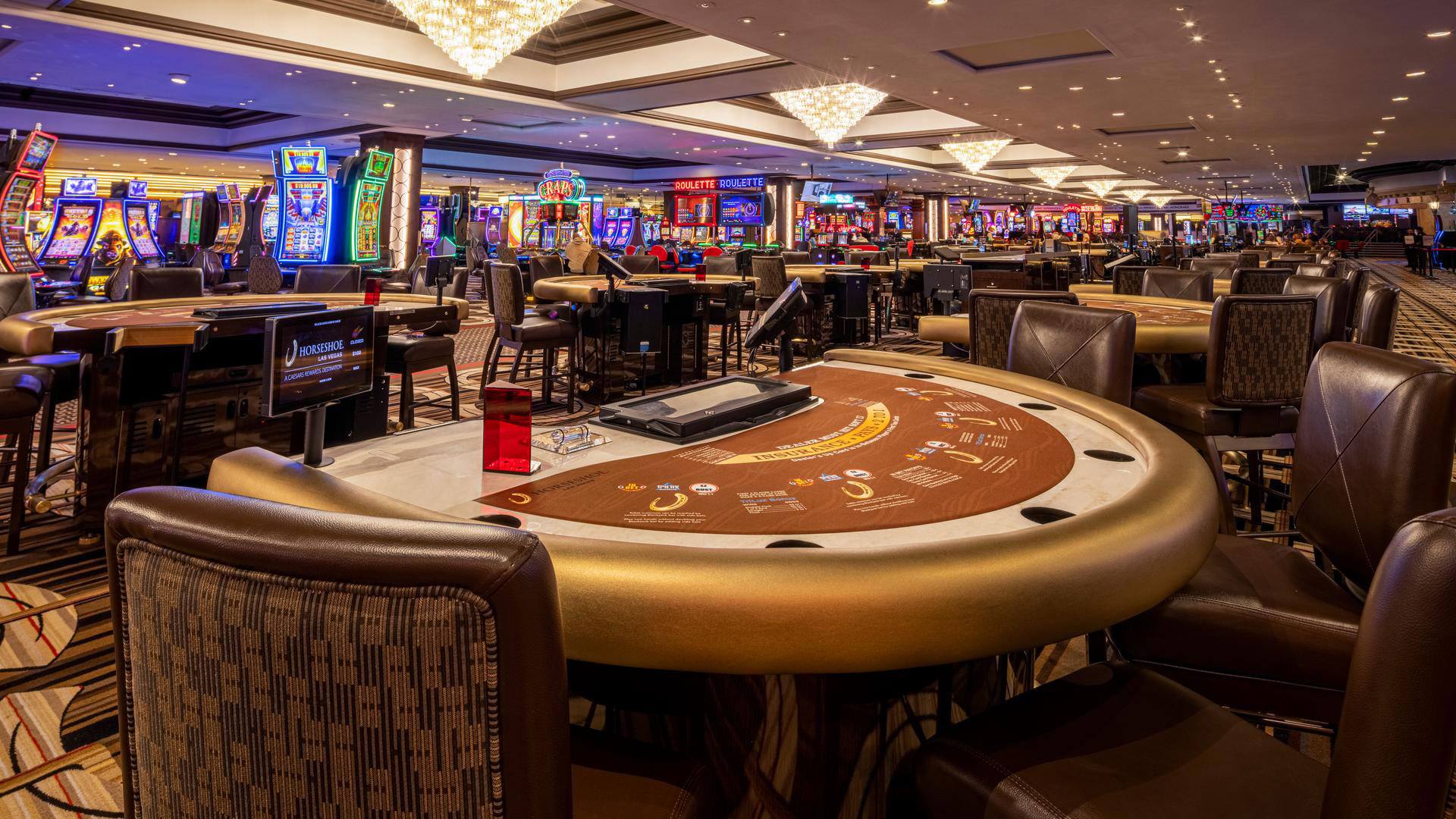
The Gambling Act 2005 created a partnership between the Gambling Commission and 368 licensing authorities in England, Wales and Scotland for the regulation of land-based gambling. Please upload any further evidence or any other information that should be considered as part of this consultation relating to an age limit on ‘cash-out’ Category D slot-style machines. Do you think premises should adopt voluntary test purchasing as a way to monitor under-18s activity on Category D ‘cash-out’ slot-style machines? While under-18s may make up a small proportion of total players, there is evidence that they do play on these machines. Granular data is not available on how many of these are ‘cash-out’ slot-style machines, which are in scope of this measure.
For example, some machines accept indirect payment from a debit card via mobile apps. The legislation also requires ATMs in gambling-licensed premises to be positioned so that any customer who wishes to use them must stop gambling in order to do so, while in pubs and clubs the rule comes from the Code of Practice. What impact would Options 1, 2 and 3 have on the product mix of Category B, C and D machines? If available, please provide estimates of the potential impact of Options 1, 2 and 3 on the overall number of machines. What impact would Options 1, 2 and 3 have on the overall number of Category D machines? What impact would Options 1, 2 and 3 have on the overall number of Category C machines?

In the Netherlands, gambling legislation requires that all online operators pay an annual levy (which was increased in October 2021), a fixed percentage of which supports the Addiction Prevention Fund. Beside the main funding given to GambleAware, some other industry contributions under this licence condition go directly to other bodies which the Gambling Commission recognises as suitable recipients for the purposes of this licence requirement on operators. The report recommended that a review of the current fee model be carried out, including looking at the way that licence fees could be used to create financial incentives on operators to raise standards.
For this reason, submissions from members of the public which came via 38 Degrees accounted for 94% of all submissions of the Act Review call for evidence by volume. However, where the evidence is pertinent to policy development, suitably anonymised excerpts have been included throughout the white paper. We do not intend to publish in full all of the submissions to the call for evidence as a number of respondents provided information on a confidential basis. Finally, treatment providers, most notably NHS clinicians and third sector gambling treatment specialists, provided 8 submissions. 18 sports and racing bodies provided targeted submissions on aspects of the call for evidence which overlapped with their sport, mainly on advertising and sponsorship. The All Party Betting and Gaming Group did not make a collective submission, but individual members provided evidence independently.
This suggests a relatively similar level of binge gambling across both machine categories. Data on session duration shows that, in general, players spend a similar amount of time on Category B machines as Category C and D machines. The data used in this section reflects activity from April to September 2019 and relates to a single session on a particular machine.
Gambling Commission
This is viewed as a more proportionate table gaming area compared to other floor space requirements, and will ensure parity with 1968 Act casinos. Small 2005 Act casinos will also experience a reduction in their required minimum table gaming area, from 500sqm to 250sqm. This will ensure that only distinct and sizeable table gaming areas can count towards the total, giving customers a genuine mix of products that are easily accessible and identifiable in a casino. Despite respondents indicating a preference for venues to be made to reduce their gambling area, we think this is a fair exemption for the small number of casinos that it will apply to.
There is now a maximum stake limit in place for online slot games. Despite the restrictions highlighted on this page, the UK has some of the most relaxed gambling legislation in the world. We’ll discuss how they help to protect online gamblers in the UK. For example, remote gambling and software technical standard 11 requires licensees to implement measures intended to deter, prevent, and detect collusion and cheating. 1 Licensees must conduct an assessment of the risks of their business being used for money laundering and terrorist financing. 6 Licensees must put into effect procedures designed to ensure that an individual who has self-excluded cannot gain access to gambling.

This information is available in the casino’s terms and conditions and on the UKGC register. UKGC-licensed operators must protect player funds so that, in the event of insolvency, your balance can be returned to you. Understanding these protections helps you appreciate why playing at a UKGC-licensed casino is so important.

The Gambling Act’s criminal penalties apply to operators providing facilities, not to individuals using them. A recurring consumer misconception is that if an offshore gambling site is accessible in Great Britain, it must be lawful. Advertising unlawful gambling to Great Britain consumers is also a criminal offence. A remote licence application typically takes up to 16 weeks depending on business complexity. The table below summarises the main licence types and what each one covers in practice. An overseas licence does not authorise Great Britain-facing operations.
The intent of the Gambling Act 2005 is to provide licensing authorities with the ability to manage local risks and make decisions using local knowledge. Some licensing authorities expressed concern that their powers were not sufficient to apply local considerations and to shape gambling in their local areas when making licensing decisions. We propose therefore to work with the Gambling Commission and the bingo industry to look further at the options and conditions under which licensed bingo premises might be permitted to offer side bets. We have taken the Gambling Commission’s advice into account on this issue, which outlines some of the possible conditions that could be put in place to minimise any risk of side-bets leading to a wider range of games that may be unsuitable for licensed bingo premises being made available. Because the Gambling Commission requires that bingo is played as an equal chance game (i.e. each card has the same chance of winning as another card), the industry says there is no opportunity for customers to choose their own numbers (or colours) as opposed to them being chosen at random for them.
Alcohol licensed premises are automatically entitled to 2 gaming machines of Category C or D, and while Category D machines are not prohibited for under 18s, there is an age limit of 18 years for all Category C machines. This requirement covers all casinos (regardless of fee category), as well as betting premises, AGCs, FECs and bingo premises that are fee Category C or higher. On the balance of the evidence, we do however believe a more precautionary approach is justified for slot style games which mirror the mechanics of adult-only gaming machines, particularly those which pay out cash. All forms of Category D gaming machines can currently be played at any age unless the premises in which they are located are age-restricted. However, one local council reported poor test purchasing pass rates for gaming machines sited in alcohol licensed premises, while advice from the Gambling Commission pointed to poor test purchasing results from both alcohol licensed premises and on course bookmakers prior to 2020.
The Gambling Commission will continue to monitor that market and consider where and when it could be leveraged to further the government’s objectives for the gambling sector, including the prevention of underage gambling. However, 5% of 11 to 16-year-olds reported using parents’ and/or guardians’ accounts to play on gambling websites or place bets online with their permission, which can be difficult to prevent from a regulatory perspective. Gambling Commission research shows online gambling is experienced by fewer 11 to 16-year-olds than other forms of gambling. These new rules have effectively prevented illegal underage gambling online using a child’s own details or invented identities.
The vast majority of submissions to the call for evidence from outside of industry supported a substantial increase in the Gambling Commission’s fees, and an increase in flexibility, to enhance its effective regulation of the gambling industry. Submissions from industry and campaign groups differed on whether there is currently a significant black market for gambling or a risk of one emerging. The government hopes that this approach will raise standards across the industry and therefore ensure that customers are protected adequately and that gambling is free from crime. In a market where the largest companies account for a large proportion of gambling, the Commission will also explore options for an enhanced account-based compliance approach that will include dedicated team members assigned to the largest operators on a permanent basis. This will include more active oversight of operators beyond the Commission’s current approach, which requires operators to report key information on a regular basis but targets compliance activity and checks on a risk-based and intelligence-led basis. We also note that compliance with voluntary codes may be relevant in deciding operators’ suitability to hold a gambling licence during Gambling Commission enforcement action.
The majority of respondents agreed that premises should adopt voluntary test purchasing as a way to monitor under-18s activity on ‘cash-out’ Category D slot-style machines. In relation to measures that venues should adopt to ensure no under-18s play on these types of machines, responses included additional staff checks on customers, staff training and placing machines in visible areas near cash desks or prize bars. Category C machines, which have a maximum stake of £1 and a maximum prize of £100, can only be played by adults in certain venues, such as pubs, betting shops, arcades and bingo halls.
The regulator also makes use of the system of personal management licences to act against individuals and there have been licence suspensions in cases where the regulator considered the operator to be substantially non-compliant. The usual pattern of regulatory enforcement is for the regulator to instigate a review of the operating licence in question, with the consequences described above. The British regulator sites not on gamstop continues its series of enforcement actions against its licensees, as described above, including follow-ups from previous enforcement actions. Have fines, licence revocations or other sanctions been enforced in your jurisdiction? Anyone who is involved to any material extent in the provision of gambling, or gambling software, may be committing an offence in the UK if they are not correctly licensed or if they cannot take advantage of one of the limited range of exemptions in the legislation.
However, we are aware of the possibility that some operators may attempt to maximise their number of Category B cabinets above and beyond that intended by the 50/50 proposal by siting tablets which are not genuinely accessible or in-fill machines in their venues. We anticipate that our proposal to allow operators to increase their number of Category B machines to 50 percent will enable operators to better meet customer demand, and in turn minimise the likelihood of ‘available for use’ guidance being subverted. The Gambling Commission has expressed concern that operators currently seek to maximise Category B machine numbers by providing Category C and D games on inaccessible small tablets or via in-fill machines. To ensure a proportionate and evidence-based balance is satisfied, we are seeking views from a range of interested stakeholders to inform the strengths and risks of each option. While the intensiveness of energy expenditure will vary by machine device type and energy efficiency, the costs to industry of maintaining these machines can be significant. Gaming machines account for a significant proportion of energy costs, a substantial number of which are sited by operators purely to meet the 80/20 rule.